
The Cambridge Diet Review - 30 Things You Need to Know
The Cambridge Diet is a low-calorie diet that was originally introduced by Dr. Alan Howard of Cambridge University. The Cambridge Diet is said to produce weight loss by restricting calorie intake each day to under 1500 and also encourages the use of supplemental products like shakes, smoothies, soups and meal bars. Can the Cambridge Diet help you shed those pesky extra pounds?
Our research team asked this same question and wanted to know if this low-calorie diet is sustainable and if so, does it actually help to decrease weight and inches?
The research team dug deep into the roots of the Cambridge Diet to analyze the food plan as well as the variety of supplemental products. Then, we gathered facts about the benefits and potential drawbacks. Finally, we compiled the data into the bottom line.
The Cambridge Diet can be purchased through their Official Site.
What is The Cambridge Diet?
The Cambridge Diet is a weight-loss plan involving “flexible” programs that claim to work for both men and women. It offers pre-packaged meals, weight-loss counseling, and low-calorie food suggestions. We wanted to tackle research from the start, so let’s get a taste of what science has to say about plans like this.
- Obesity (A Research Journal) – “A meal plan incorporating portion‐controlled prepackaged entrées promotes greater weight and fat loss than a standard self‐selected diet, with comparable meal satisfaction. Initial weight loss predicts long‐term weight loss so these results are relevant to likelihood of longer term success.”
- MMWR – “Through combined counseling for weight loss, physical activity, and self-management education, and by making referrals to evidence-based programs, providers can help their patients with… make meaningful improvements in quality-of-life and long-term health outcomes.”
- Journal of Obesity – And the counseling doesn’t even have to be in person. Web-based programs are more effective than ever at helping men and women through the toughest times in weight loss.
Some of the ingredients in the pre-packaged foods include:
- Skimmed Milk Powder
- Maltodextrin
- Guar Gum
- Refined Fractionated Palm Oil
- Acesulfame K
- Sucralose
- Carrageenan
- Dried Glucose Syrup
- Silicon Dioxide
- Oligofructose
This diet was developed in 1970 by Doctor Alan Howard at Cambridge University, England.
It offers customers a chance to lose weight quickly and maintain that weight loss with products like meal replacement shakes, soups, rice, nutrition bars, treats, and more.
All of the pre-packaged food items claim to be very low in calories and “contain the vitamins and minerals you need for balanced nutrition and healthy weight loss.”
The Cambridge Diet plan uses a balanced level of protein and carbohydrates to induce “mild ketosis.”
Ketosis is a normal metabolic process that happens when a low number of grams of carbohydrates are eaten.
The body switches from burning carbs to burning fat for fuel. Eating under 50 grams of carbohydrates, for most people, will result in ketosis.
Being in ketosis can suppress the appetite and reduce cravings as well.
Although this can be a good strategy for weight loss, having excessive ketones in the bloodstream can lead to ketoacidosis, which is dangerous.
So, how do we recognize ketosis vs. ketoacidosis?
Some signs of ketosis include:
- Bad breath
- Suppressed appetite
- Increased energy and mental clarity
- Mild fatigue
Ketosis is generally safe for healthy adults. Ketoacidosis is not healthy, however. Some signs include:
- Dry mouth
- Excessive urination
- Dry or flushed skin
- Nausea and vomiting
- Fruity-smelling breath
Cambridge Diet Programs
The Cambridge Diet programs include Regular, Fast Start, Physician-Monitored, Maintenance, and Lifetime Nutrition.
The Cambridge Diet Competitors
| Product | Review | |
|---|---|---|
| Body For Life | read | |
| SlimFast | read | |
| Juice Plus+ | read | |
| Optifast | read | |
| Noom | read |
Customer Service Contact Information
- Phone: +44 (0)1536 403344
- Email: admin@cambridgeweightplan.co.uk
- Address: Cambridge Weight Plan Ltd Hatton House, Hunters Road, Corby, Northants, NN17 5JE
Scroll below for one of the best products we’ve seen over the last year.
What is Ketosis and the Effects on Your Body?
Ketosis is a metabolic state of the body characterized by an increased level of Ketone bodies in tissue. In this case, we are talking about the latter, and there is an entire process that needs explaining to understand it fully.
The Body and Energy
Just like everything else in the universe, our bodies require energy to operate. Usually, the body’s primary fuel source for the strength to think, breathe, run, and jump is glucose.
Glucose is in carbohydrates: sugar, bread, grains, beans, legumes, fruit, and starchy vegetables like potatoes and radishes. The excess glucose that is leftover during physical or mental activity is stored as glycogen in the body until it is needed.
If someone is a diet that is low enough in carbohydrates, then the body will use up its glycogen stores. Once this has happened, the body turns to the body’s fat stores as an alternative form of fuel.
The liver starts breaking down fat converting it to glucose. In this process, old fat burning ketones are a byproduct.
What are Ketones?
There are three types of ketone bodies produced when the liver involves itself in fat burning for fuel. They are Acetate, Acetoacetate, and Beta-hydroxybutyrate (BHB).
When ketogenesis first occurs (i.e., the liver first creates ketones while breaking down fatty acids), acetoacetate is formed. It begins to take over the function of transporting energy from the liver to other body areas.
BHB is the second ketone to be produced and also contributes to carrying power. Acetone is the last ketone that gets created and generally does very little to aid energy transference.
Ketosis and Fat Loss
While in a ketosis state, the body will burn off its fat stores, leading to an initial dramatic weight loss in many cases. Here are three benefits to being in a state of ketosis:
- Breaking down fat stored in the body – As the body breaks down its stores because of the low-calorie regimen, dieters experience a fat loss, which is essential to any weight loss program designed to shed weight quickly, as the Cambridge diet reviews say. Before and after testimony, the Cambridge diet indicates that keeping the body in ketosis is essential to promptly shedding weight.
- Reduced hunger cravings – Ketosis not only helps you burn off excess body fat, but it also reduces the hunger pangs that can weigh heavily on a person and push them away from calorie counting and portion control. In fact, by ridding the body of carbohydrates not to be hungry anymore, a dieter does not have to be so strict with calorie counting because their hunger signals will be much more regulated.
- Better regulation of blood sugar – Eliminating the majority of carbohydrates from the body also stabilizes blood sugar levels. The average diet is full of refined sugars and starches that can spike blood sugar, leading to continually feeling hungry and the body using fat stores for glucose.
Ketosis Side Effects

- Frequent urination – This is a natural reaction to the body burning through its glucose stores as water is expelled during the process. Also, the kidneys will start excreting excess sodium, which will add to urination. It’s nothing to worry about, though, and will pass quickly.
- Dizziness and drowsiness – This comes from vitamins and minerals being excreted along with the extra water while in ketosis. It can be combated by eating different healthy vegetables and meats and adding extra salt with meals.
- Low blood sugar – This happens at the beginning of going ketogenic and usually only occurs in people who had previously high sugar diets. The body becomes accustomed to the higher levels of sugar, and the sudden drop takes some adjustment.
- Sugar cravings – One of the goals of being in Ketosis is reduced sugar cravings, but initially, there can be intense cravings as the body has not yet adjusted to the new diet.
- Constipation – While the body is initially adjusting to being in ketosis, it releases a lot of water, which ends up being urinated. This leaves a lack of water in the body, which can cause constipation. This is overcome by increasing the amount of fiber in the diet.
- Diarrhea – While some people will experience constipation, others will have the opposite happen. Diarrhea due to the natural adjustment period the body needs for processing vastly different content, or in some cases, is due to people having too much protein in their diet.
- Muscle cramps – This can happen from excessive minerals being excreted from the body and water during the initial period of ketosis. Extra salt and magnesium can help.
- Ketosis flu – During the initial period, dehydration and a lack of salt can lead people to feel flu-like symptoms. Extra water and salt will help mitigate these symptoms.
- Sweet breath – This is a sign of the body getting rid of excess acetone produced (but not generally used) during ketosis. It will usually dissipate within a couple of weeks, but if it persists, try slightly increasing carb levels between 50 and 70.
Ketosis Misconceptions
There are a couple of misconceptions about ketosis and possible health dangers to its practitioners. The first of these is that ketosis can lead to the body burning energy from muscle instead of fat.
While it’s true that if the body has no other energy source, it will use muscle mass to keep the vital organs running. This only happens during starvation when there are less than 20 grams of carbohydrates entering the body daily. During ketosis, there should still be an intake of 20 and 50 grams of carbs daily.
The big difference between the two has to do with the number of ketones in the blood. There are relatively few ketones in the blood during ketosis, while those with ketoacidosis have incredibly high levels.
The high levels can lead to the blood becoming too acidic, which can be fatal if left unchecked.
The state can also affect severe alcoholics and someone who is starving.
Who is Dr. Alan Howard?
The inventor of the Cambridge diet is a professor by the name of Dr. Alan Howard. Back in 1970, he developed the Cambridge diet while working at the university. Commercially, the Cambridge diet USA product released in 1980 and came under fire by regulators and health authorities after health concerns.
The Cambridge diet UK came out in 1984 and faced similar problems. In 1986 the diet was changed to coincide with the standards set by the Commission on Medical Aspects (COMA).
Dr. Alan Howard received a Ph.D. in immunology at Downing College Cambridge before going on to undergo training as a nutritionist at the Medical Research Council’s Dunn Nutritional Laboratory, which is also in Cambridge.
Beginning in 1973, Howard began working on a very-low-calorie diet for people who were obese. Initially called “Howard’s diet,” he saw his diet’s viability and began to move it from a research concept into a commercially viable product.
In 1979 the Cambridge diet was ready to be marketed with Howard on the patent as a co-inventor. Howard made Cambridge diet news by leaving the company in 2005 when he sold the company’s rights.
Where are Cambridge Diet Products Made?
The Cambridge diet center is in the UK. From the Cambridge diet UK location, they can ship their products anywhere in the world, including those looking for Cambridge diet USA products.
This Cambridge diet UK location is the only place where these products are manufactured, and the only place they are shipped. There used to be a Cambridge diet USA location years ago, but Dr. Howard bought out the rights to that brand and consolidated to the United Kingdom.
How Many Calories are Allowed on the Cambridge Diet?
This diet plan operates in some stages with varying degrees of calorie counting. Cambridge is a VLCD, (very low-calorie diet) that ranges between 415 and 1500 calories per day. Most of this will come through various shakes and drinks, which is a liquid diet.
The diet starts very restrictively at the low caloric end to encourage quick weight loss and get the body acclimated to consuming smaller portions. As the diet progresses, so does the daily calorie regime to get the dieter to healthy levels.
Guide to the Cambridge Diet

To fully understand the Cambridge diet steps and how the progression works, we need first to understand what the Cambridge diet is and what purpose it serves.
The Cambridge diet is a very low calorie (VLC) diet that aims to shed off an extreme amount of weight in a short period. The way it goes about this is by restricting caloric intake to as little as 415 calories during the initial stage and only reaching 1,500 calories by the last stage.
Some critics have called this a fad diet, citing that according to the medical community’s consensus, consuming less than 1,000 calories a day is not healthy. However, proponents of the Cambridge diet say that only staying on a diet for 12 weeks is not damaging, and the pros far outweigh any negatives.
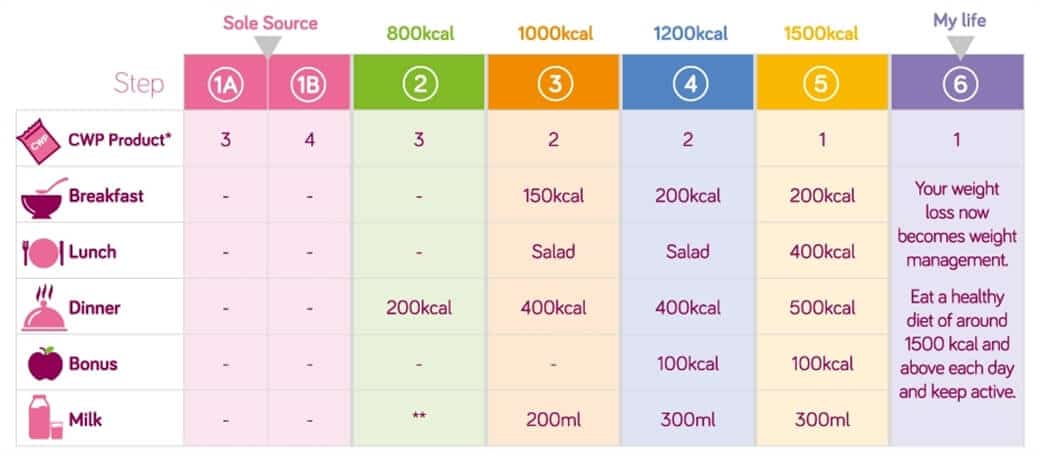
There are six steps to the Cambridge diet that will work off each other to help practitioners shed their excess weight quickly and develop new eating habits that will ensure that they do not put the pounds back on.
The Progression from Weight Loss to Weight Management
We start with the second stage; regular food is slowly brought back to the diet and an increase in caloric intake. The body should still be in ketosis as the second stage only has users consuming 800 calories daily, which would be dangerously low over a long time.
As the body still works away at burning fat stores, the small meals allowed retrain the brain to have a better sense of portion control, which is an essential factor in keeping weight off.
By the fifth stage of the diet plan, the dieter has been brought up to a 1,500 daily caloric intake and is only supplementing one Cambridge diet weight plan product against the rest of the time eating regular food.
There are dozens of recipes online at the Cambridge Diet website that will help people cook healthy meals that are high in nutrients and as devoid as possible of excess sugars and empty calories.
It is important to note that while a healthy diet with an eye toward health management is vital in keeping at a healthy weight, this alone is not enough to stay fit.
Having some form of regular exercise is not only beneficial but a required part of staying in good shape. This is not only good to keep in mind for personal fitness reasons, but also when planning out the final weight management diet with the consultant who acted as counsel throughout the entire 12-week affair.
What are the 6 Steps of the Cambridge Diet?
The Cambridge diet plan is a maximum 12-week system that works by drastically reducing the number of calories taken into the body, thereby causing a tremendous amount of weight loss.
Due to the types of meal suggestions, the diet calls for the body ends up entering a state of ketosis, whereby it begins consuming its reserves of fat instead of carbohydrates being available. There are six steps total to the diet plan with calorie requirements ranging from 415 to 1,500 calories per day.
Some consider this to be a fad diet claiming there is no scientific research backing the diet’s claims. Still, ketosis is a scientifically proven function of the human body, and simple mathematics shows that if a person consumes fewer calories than they use, they will lose weight.
This program requires you to follow their “steps to success” that they claim is designed to help you lose weight and keep it off.
The plan includes working directly with a Cambridge Diet Consultant, who will guides users through the steps, including preparation, weight loss goals, and long-term weight loss management.
The “Independent Consultants” are people who have successfully used the Cambridge Diet to lose weight.
Consultants help others choose and prepare for the right Cambridge Diet, provide guidance, support, understanding, and motivation.
This guidance is one-on-one, as opposed to being in a group setting.
Step 1 – Sole Source
During this step, only Cambridge Diet foods and liquids are allowable. There are two steps to choose from here, Step 1A and Step 1B. Approved fluids can include water, coffee, and tea, including black, green tea, herbal, and fruit flavors.
The first step in this diet system is the most stringent, and the one most dieters will have the most challenging time. This is because of the drastic change in food consumption from whatever their pre-Cambridge diet consisted of taking the body and mind a bit of time to adjust.
That said, this stage of the diet lasts two weeks, has two starting points, and consists solely of liquid supplements purchased through the Cambridge diet online store. Before getting into this part of the system’s specifics, first a quick word regarding health and safety.
Since this program’s initial step can be challenging, especially if transitioning from a high-sugar diet, it might be better for some to start at a higher degree and work their way backward.
Depending on a person’s gender, build, and personal history, starting the plan at 600 calories instead of 415 might be more advisable. Cambridge diet offers consultants who will work with potential dieters before they ever begin to figure out which plan works the best in each situation. Make sure to speak with a consultant before jumping into this plan.
As stated, this plan ranges from 415 – 600 calories, is a liquid diet, has two starting points, and lasts a total of 2 weeks. The first step is the sole source step because all that allowable is the Cambridge diet alternative.
Their products come in vacuum-sealed pouches that are for use with water. Part 1A is for all females below 5’8″ and consists of 3 Cambridge weight plan products consumed daily plus 2.25 liters (4 pints) of fluids.
Fluids can consist of water, coffee, or herbal teas. It consists of 4 Cambridge diet weight plan products for daily use plus 2.25 liters of fluid.
During this time, the body will first enter ketosis and start using stored fats for energy, causing a dramatic drop in weight.
- Step 1A: Women under 5’8″ eat 3 Cambridge Diet food products and drink 4 pints of approved fluids, daily. Women over 5’8″ and all men eat 4 Cambridge Diet food products and drink 4 pints of approved fluids daily.
- Step 1B: 4 Cambridge Diet food products and 4 pints of approved fluids, daily.
Step 2
This is the step where everyday foods get mixed in with the Cambridge meal replacement products. The calorie requirements move up from 415-600 calories to 800 calories, but only roughly 200 of these calories will come from a healthy and well-balanced dinner.
Fluid requirements stay the same as the first step, except now some fruit teas and Cambridge Ready-to-Go drinks can be mixed in. Keep in mind that the regular food that makes up dinner will also be deficient in carbohydrates to maintain ketosis.
Daily meals include 3 Cambridge Diet foods plus one 200kcal meal and four pints of fluid. The fluids may consist of coffee, tea, Cambridge Water Flavors, occasional diet drinks, or a ready-to-drink shake.
Step 3
The next step reaches an equilibrium between the Cambridge diet weight plan products and regular food. During this phase, the calorie intake moves up to 1,000 daily, and now dieters will enjoy regular food at every meal.
There’s a 150 calorie breakfast to get the day going, a light salad for lunch, and a 400 calorie dinner. All the meals will be meager in carbohydrates and full of good fats and proteins.
Also, at this stage, 200ml daily of skimmed milk is recommended (alternatives are allowed if there is a lactose issue, or the dieter does not consume dairy). The water and fluid dose stays the same as the previous two steps.
Step 4
In this step, The calorie is moved to 1200 daily, and a healthy shake can now be included.
Dieters will take 2 Cambridge diet weight plan products, have a 200 calorie breakfast and 400 calorie dinner, eat a light salad for lunch, drink 300ml of skimmed milk or equivalent, and have a 100 calorie healthy snack bonus.
By this time, the body should no longer be in ketosis, and the diet is becoming more akin to a regular diet. Fluid intake should remain constant from the previous steps.
Step 5
By this point, the dieter will have shed off most of their extra weight as their diet gets closer to being focused on weight management instead of weight loss.
Now only one Cambridge diet weight plan product is taken, and the rest of the diet comes from regular food.
The total calories taken in is 1,500, and the water and fluid intake remains the same. This is the last step in the dieting phase of the plan and will see the smallest amount of weight loss. Mostly, this step is about transitioning from the diet to the management portion of the plan.
Step 6
By now the target weight has been reached, and the dieter is encouraged to work with their consultant to figure out what amount of daily calories is right for their body. Everyone is different and some people will need more calories daily than others.
Dieters are also encouraged to keep in contact with their consultant and let them know how everything is going from time to time. It is a great way to tweak a meal plan to keep it optimal.
It is also suggested that people who include 1 Cambridge Diet prepackaged food daily stay more successful at maintaining weight goals. These stages are meant to cater to all sorts of different weight-loss goals.
The goals themselves can be discussed with your assigned counselor who will guide you “through your weight loss journey” and prepare you for the program.
The only problem is that very few customer reviews indicate this diet to be effective, and a much greater number of experts keep shutting it down.
The First Two Weeks on the Cambridge Diet

The first two weeks on this system are by far the toughest to get used due to the drastic change in diet. On average a healthy adult human consumes between 2,000 and 2,500 calories of food a day including carbohydrates, fats, proteins, and everything else that can be found in the average diet.
If a person is seeking out this particular diet, then they probably have some extra weight on them, and 9 times out of 10 that weight has come from eating too many sugars. The point is that going from either the standard western diet or a high sugar diet to consuming between 400 and 600 calories of only liquids is a considerable adjustment both physically and mentally.
According to the Cambridge diet before and after testimony out there, the first two weeks of the diet consist of three liquid meals a day that includes a Cambridge diet drink such as a shake, soup, or porridge.
Dieters will need to seek Cambridge diet support beforehand from one of their consultants to help choose the plan that works best with their body type, gender, and age. According to Cambridge diet news on their site, dieters can expect to lose a stone (14 lbs or 6.35 kg) during the first month.
During the first two weeks, there will be rapid weight loss as the body is busy converting previously-stored fats into usable energy. This is a process known as ketosis. During this time there are some side effects that people could experience.
Also, make sure to get Cambridge diet support from a consultant if experiencing any adverse side effects.
Unhealthy Ingredients Used in the Cambridge Diet
One of the main staples of the Cambridge diet is the pre-packaged meals that are supposed to replace otherwise cooked or bought meals throughout the day. In fact, one could ask what is the Cambridge diet without these pre-packaged meals since it relies so heavily upon them.
Whether it be the meal suggestions consisting of a liquid diet in the first stage or more solid foods in the later stages, these pre-packaged meals have to use a lot of different ingredients to not only add taste and nutrients to the food but also to preserve them. Unfortunately, there are some side effects known to be associated with some of them.
Skimmed Milk Powder
Some say that skimmed milk is nothing more than a “sales tactic” used to push products.
It has the benefit of creating the building blocks for protein, vitamins, and minerals in the body. On the negative side, skimmed milk powder is known to cause diarrhea.
Women who plan on becoming pregnant or are breastfeeding should consult their doctor before taking skimmed milk powder.
Maltodextrin
Maltodextrin is a polysaccharide used as a food additive in many processed products such as soda and candy, according to Critical Reviews in Food Science and Nutrition. It also has heat retention qualities. Since this chemical is a sugar, the body will break it down into glucose and use it as energy.
Side effects associated with maltodextrin include allergic rhinitis with hives and eczema. If there are other allergies or lactation concerns, then consult a doctor.
This food additive is made from starch and can be used in beer brewing to increase the “gravity,” or it can be found in food as a filler or sweetener.
Controversy surrounds this ingredient because it’s made from corn starch. Ninety percent of corn starch is genetically modified.
Guar Gum
A fiber from the seed of the guar plant, according to the Journal of Food Science and Technology. that is used medically to regulate the stool providing relief for both constipation and diarrhea. It also has positive benefits for small intestinal bacterial overgrowth.
In manufacturing, guar gum is used to bind food together. Possible side effects from guar gum include Gastrointestinal (GI) obstruction. Guar gum appears to be safe for women who are pregnant.
Birth control pills that contain ethinyl estradiol may interact with guar gum, as is also the case with metformin, and penicillin.
Guar gum may help with achieving the feeling of “fullness” but can cause some pretty uncomfortable side effects that we’ll circle back to in a bit.
Sucralose and Acesulfame K
Going by the market name Splenda, this artificial sweetener is similar to acesulfame K in that it is markedly stronger than sugar and has no initial impact on blood sugar levels in the body.
There is research that shows artificial sweeteners in general not only affect the sense of taste as eluded to above, but also that it can lead to weight gain and an abnormally high desire for carbohydrates.
According to the Journal of Pharmacology and Pharmacotherapeutics, basically, the brain gets rewired to desire a much higher level of sugar than usual because of the strength of the artificial sweetener. In the case of sucralose, it is 1,000 times stronger than sugar. Other side effects can include diarrhea, bloating, disrupting gut flora, and headaches.
Side effects can include headaches, mental confusion, nausea, liver effects, visual disturbances, and kidney effects. Also, long-term use has been shown to alter the sense of taste where natural sugars are concerned.
Because it’s an artificial sweetener, according to the Journal of the Pakistan Association, it’s also surrounded by some controversy.
Splenda is made of the high-potency artificial sweetener sucralose and was given to test subjects for a 12 week period. At the end of the 12-week period, tests found that the “probiotic” organisms in the gastrointestinal tract had been significantly reduced.
Carrageenan
This chemical is used as a thickener and binder and is extracted from red seaweed (also known as Irish Moss).
The food-grade carrageenan does have a list of side-effects that include bloating, inflammation, glucose intolerance, and food allergies.
Environmental Health Perspectives published a review showing the harmful gastrointestinal effects of carrageenan.
Silicon dioxide
Also known as Silica, this substance is formed naturally and found in quartz, plants, animals, humans, and the Earth itself. The planet’s crust is made up of 59% silica.
There are no studies that support any evidence that silica is hazardous to humans when ingested. The only proof of silica being harmful is through inhaling it in dust from which only happens around mining, construction, and quarrying sites.
Oligofructose
This chemical is actually a mixture of different chains of plant sugars linked together. Specifically, they are either taken from Jerusalem artichokes, asparagus, and soybeans or are produced in a laboratory. Medically, oligofructose is used as a prebiotic.
Prebiotics are the food that different probiotics like bifidobacteria, lactobacillus, and Saccharomyces eat. In manufacturing, oligofructose is used as a sweetener.
Potential side effects include intestinal noises, bloating, intestinal gas, stomach cramps, and diarrhea.
The Cambridge Diet Products
Each step of the Cambridge Diet includes eating some of the “delicious tasting low-calorie formula food products.”
Flavors for the bars include peanut crunch and lemon yogurt.
Shake flavors include:
- Banana
- Chocolate
- Chocolate Mint
- Lactose-Free Chocolate
- Lactose-Free Vanilla
- Strawberry
- Vanilla
- Cappuccino
- Hazelnut & Chocolate
Soup flavors include:
- Chicken and Mushroom
- Oriental Chili
- Vegetable with Croutons
- Leek and Potato
What Comes With the Cambridge Diet?
This diet system offers some choices depending on which stage in the plan someone is. The first stage is very restrictive and only calls for drinking Cambridge diet drinks along with water, coffee, and herbal tea.
After the first stage, more foods are slowly added until a healthy diet is achieved. For those who plan to buy Cambridge diet products, here is a list of what they offer.
Total Diet Replacement Products
These are ready-to-mix pouches designed to provide nutrients during the initial stage of the Cambridge diet plan and only need to be added to water and blended. There are shakes, soup, porage, and energy bars available. All are vegetarian-friendly.
- Shakes – There are 144 calories per packet, and they come in chocolate, vanilla, strawberry, and banana flavor.
- Soup – This product is chicken and mushroom flavored and contains only 138 calories.
- Porridge – Comes in original flavor and has 144 calories per packet.
- Bars – These Cambridge diet bars are 150 calories apiece and come in lemon and peanut butter flavor.
- Spicy Couscous – A ready-to-eat packet containing couscous, wheat protein, and seasonings, this meal is 200 calories, vegetarian-friendly, and takes only a few minutes to prepare.
Bars
These bars differ from the total diet replacement version in that each bar is between 200 and 215 calories in addition to having slightly higher levels of fats, protein, vitamins, and minerals.
Ready-to-Drink Products
Meant for those who have to figure out how to do Cambridge diet while on-the-go, these drinks provide a Cambridge diet alternative to other higher calorie drinks. They are all vegetarian-friendly and contain soy or milk products. These Cambridge diet drinks range from 200 to 215 calories.
Smoothies

This Cambridge diet drink is similar to the shake in that it comes in a powdered form that gets mixed with water and blended. They contain yogurt for both texture and protein content and are available in blackcurrant & apple or cherry & strawberry. They include 203 calories.
Shakes
These Cambridge diet shakes are slightly higher in content than their total meal replacement counterparts checking in at 200-215 calories. They are vegetarian with some containing soy and/or milk.
- Banana
- Strawberry
- Vanilla
- Chocolate
- Cappuccino
- Chocolate mint
- Lactose-free chocolate
- Lactose-free vanilla
Soups
As with the shakes, these soups are slightly higher calorie versions of the total meal replacement version. They are also vegetarian-friendly, contain soy and/or milk, and are a little over 200 calories.
- Chicken & mushroom
- Oriental chili
- Vegetable with croutons
- Mushroom
- Leek and potato
Two different pasta dishes are both around 200 calories and offer proper nutrients for a meal. Pre-packaged meals require little work to prepare and synergize with the weight management goals of the diet.
The same goes for the two rice dishes that are available through Cambridge diet distributors. They offer Chicken Tikka curry and Thai Green curry. Porridges come in apple & cinnamon, golden syrup maple & pecan, and original flavors.
Dessert
On a calorie-controlled diet, it might seem strange to see dessert options, but this vanilla rice pudding follows the same sorts of guidelines as seen with the Cambridge diet products seen above.
The Cambridge Diet Side Effects

Many people on a very-low-calorie, restricted diet experience fast and dramatic weight loss at first. However, the side effects of such a diet outweigh the benefits. In this case, side effects can include:
Bad Breath
Bad breath generally happens because there is not enough hydration happening in the diet. Up the amount of water and use mouthwash or a mouth spray to mask the bad breath until it goes away on its own.
Bad breath can also be due to already existent tooth decay that gets exasperated by being dehydrated. Also, if there is a lack of proper nutrients in the body, it can lead to bad breath.
During the initial stage of ketosis, the body secretes more water than normal which can lead to both dehydration and a lack of nutrients. Put more of those in the body to take care of the problem.
Feeling Cold
This can happen because of a reduced thermogenic response to dramatically reducing the amount of food being consumed. Larger meals tend to produce more of a thermogenic response than small meals due to the various chemical reactions and biological mechanisms in play during digestion.
Heat is the byproduct of the body digesting food, and less food means less heat. This will present differently in people, and sometimes only the extremities feel cold. This is normal as the body is attempting to conserve energy in light of the reduced caloric intake.
Another reason for feeling cold could be a reduced metabolic rate that comes naturally with losing weight and shedding layers of fat. In either case, it is a natural phenomenon and nothing to be concerned about. Putting on an extra set of clothes will help until the body has had time to adjust.
Constipation
Cambridge Weight Plan products are not as fibrous as regular food, and this can lead to a decrease in bowel movements. The best way to combat this is to be diligent with the water requirements for the diet.
According to the plan, 2.25 liters (4.75 pints) need to be drunk every day in addition to the water that is required for mixing the meals. If the problem persists even with following the directions or if there have been constipation problems in the past, then discuss the matter with a consultant to figure out the best course of action.
An extra fiber supplement might be needed to help with keeping regular.
Muscle Cramps
Leg cramps are normal during the first stage of the Cambridge diet. As the body burns off the remaining glucose in the body, it begins to change over to burning fat instead. This is the process of Ketosis, and one of the things that initially happens is the body purges more water than usual from body tissue.
Along with water the body also expunges salt resources as well. If these are not replenished, then cramping can happen (which is almost always in the legs). Drinking extra water with some salt dissolved in it can remedy the situation. If the problem persists then contact a doctor or the consultant.
Diarrhea
A minor issue that is most likely caused by the body not being able quite to handle the mineral load that comes from consuming Cambridge Weight Plan products. These shakes, meal replacements, and the like are loaded with minerals to compensate for the lack of food being consumed, and some people have a hard time taking that all in at once.
The best thing to do is dilute the Cambridge Weight Plan products as they are being consumed. This can be accomplished either by drinking a glass of water alongside the meal replacement product or by taking the products in half doses.
Hair Loss
General hair loss across the entire head in the form of thinning is a common side effect of weight loss and nothing to be alarmed about. If, however, hair is falling out in clumps or it seems like there is a problem then get in touch with a doctor to have it checked out.
Headache
Headaches in the initial stage of the diet can be caused by carbohydrate and/or caffeine withdrawal. This is more likely in people who either had a diet high in sugar before going on the Cambridge diet plan or drank excessive amounts of caffeine, respectively.
Taking a mild painkiller can help with the withdrawal symptom until it subsides which should only be a couple of days at most. In some cases, headaches during the beginning of the diet are due to not being properly hydrated. Remember to drink all the fluids recommended.
Abnormal Menstrual Cycle
Hormone levels in women can fluctuate greatly during periods of weight loss, and one of the possible side effects of this is an irregular cycle. That is not to say that menstruation will cease entirely, but just that the timing of the cycle could shift.
Also, some women experience breakthrough bleeding or heavier periods while they diet.
In some cases, fertility can be affected by weight loss resulting in unplanned pregnancies. There seems to be a correlation between weight loss and increased fertility. This could be a blessing in disguise for those trying to get pregnant but are having difficulty.
Hormonal contraceptives can be metabolized differently during times of weight loss so it would be beneficial to look into other means of birth control.
Nausea
The high concentration of minerals and vitamins in the Cambridge weight plan products can cause some people to feel sick after taking them. This is because their bodies are not used to consuming such a concentrated amount at one time.
Try having a glass of water while consuming the meal replacement product or cutting the Cambridge diet item in half and letting some time pass between servings. If nausea persists after trying these two methods, then bring it up to the consultant to get some advice.
Rash
Rashes have a wide variety of causes, but one thing that can be an issue is an allergic reaction to something in the product they are consuming. If a rash forms after starting the diet then stop immediately and see if the rash subsides or ceases to grow.
If it does not then go see a doctor to figure out the cause. If it does then speak with a Cambridge diet consultant before restarting the diet for advice. Certain food allergies can be avoided due to the options available on the Cambridge diet.
Thirst
Feeling thirsty while on the Cambridge diet is normal and especially during the initial stage of the diet. During ketosis, the body will initially get rid of extra water from the body leaving it mildly dehydrated.
This is why the Cambridge diet recommends drinking 2.25 liters (4.75 pints) of water daily while on a diet.
They go on to mention that the most difficult part of the plan is sticking to it. They write, “giving up normal meals and swapping them for a snack bar or a shake can be boring and feel socially isolating. This isn’t a plan you can stick to in the long-term.”
Now that we know the potential side effects of the diet, let’s dig even deeper into the ingredients to see what additional issues may be lurking in the shadows.
Skimmed Milk

Let’s face it, skimmed milk is harmless for the most part. There are some known side effects that not everyone seems to be aware of.
They include:
- Gas
- Diarrhea
- Abdominal bloating
- Nausea
- Abdominal pain
Maltodextrin
Side effects include:
- Unexplained weight gain
- Bloating
- Gas
Specific allergic reactions include:
- Rash
- Itching
- Difficulty breathing
Guar Gum
The possible side effects include:
- Increased gas
- Diarrhea
- Loose Stools
Carrageenan
This ingredient hosts its own list of negative side effects including:
- Inflammation
- Bloating
- Glucose intolerance

Advantages and Disadvantages of the Cambridge Diet
As with any diet plan, there are certain advantages and disadvantages to utilizing this Cambridge Diet plan. The plan is very restrictive and calls for a tightly controlled eating program that can leave users feeling hungry pretty much all the time.
On the other hand, because this is such a calorie-controlled diet, users can expect immediate weight loss as well as weight management during the later stages of the diet. Here are some of the advantages and disadvantages of the Cambridge diet plan.
Advantages
Extreme weight loss in a short amount of time. Users will experience immediate weight loss within the first week which will compound over the course of the diet plan.
It is almost impossible to not end up with a slimmer figure from this extreme weight-loss eating program. The caloric loss will shed fat off the hips, waist, love handles, and everywhere else as the body consumes it to stay active.
Cambridge Diet powders, drinks, shakes, and snacks are well balanced and very nutritious. While the caloric regimen is very tight the body still receives all the vitamins and minerals it needs.
Because this Cambridge diet plan is so strict with what can and can’t be consumed, people on the plan tend to eat out and cook less. This means there will be less of an urge to cheat.
Cambridge Diet Pros:
- Fast, even dramatic, weight reduction when followed as outlined- up to 3.5 lbs per week
- Slimmer look by the end of Step 5
- Replacement meals are nutritionally balanced and include vitamins and minerals
Disadvantages
Using the Cambridge diet will lead the body to enter a state of Ketosis. This means that the body is burning fat for energy instead of sugars. Some doctors have argued that Ketosis has deleterious effects on human physiology including loss of muscle mass and organ damage.
In addition to possible severe side-effects, Ketosis can also cause issues such as bad breath, weakness, fatigue, diarrhea, and vomiting. Note that these side-effects do not always take place, but are possible.
Some critics argue that the diet does not give users the proper tools to deal with long-term weight loss management that some of the other Cambridge diet alternatives that are available do.
The overall Cambridge diet cost tends to be high, and some people on the lower end of the economic scale will be unable to afford it.
Critics also say that extreme weight loss programs often lead to weight swings or yo-yo dieting which can be unhealthy over time.
Being on a VLCD very low-calorie diet with restrictive Pre-packaged meals can be demoralizing and make it difficult to stay on for the long-term.
Cambridge Diet Cons:
- Medical experts feel this plan is not healthy
- Low-calorie diets can burn muscle mass vs. fat stores
- Plenty of side effects including bad breath, hair thinning/loss, nausea, dizziness, diarrhea
- Meal replacements can be expensive
What is the Cambridge Diet Plan Fast?
The first stage of the Cambridge diet involves fasting for anywhere from 1 to 2 weeks. During this time the only thing that is consumed is pre-packaged drink mixes that can be purchased from the Cambridge diet with online ordering.
Depending on height and gender, dieters will mix up 3 to 4 of these drinks daily and add another 2.25 liters of water, coffee, or herbal tea. During this time a state of ketosis will be reached where the body will start using fat stores to generate energy instead of the normal carbohydrates.
Over the course of a couple of weeks, people can expect to lose a great deal of weight utilizing this fasting method. In addition to losing weight quickly, practitioners of this diet will also set themselves up for long-term gains by ridding themselves of the strong dependency on sugar that many people suffer from.
While the entire diet does keep people in a state of ketosis, just by getting to that point and staying there for a little bit will help reset the body’s desire for sugar making it easier to avoid unhealthy food in the future.
Another benefit of doing this fast is that it is a way to lose weight and reset the body’s sugar pleasure center without risking health and wellbeing. The pre-packaged shakes are formulated to provide all the daily nutrients needed to remain healthy and active.
This is much easier than someone trying to figure it out on the fly.
One further benefit of this diet is that people report saving both money and time by not having to prepare their own meals or eat out at restaurants while on a diet. That should more than offset the Cambridge diet cost of products.
Is The Cambridge Diet a Fad?
Here’s a program that offers quick weight loss, weight management, healthy eating options, weight counseling, and a lot more.
They claim that the diet works and, of course, that dieters are seeing results.
Well, none of that matters if the diet is a fad. A lot of experts and professionals think that it’s harmful to send your body into a state of ketosis.
In fact, most of them claim a specific list of side effects that seem eerily familiar to those we just listed above.
It wrote that a government regulator was trying to decide whether the diet should even be legally sold in Australia, saying, “the diet is so low in nutrients it has been described as ‘dangerous’ by a health professional, and it falls below recognized non-binding international standards for low-calorie diets.”
Is the Cambridge Diet Safe?

The Cambridge diet is a very low-calorie, low-carbohydrate diet which creates “mild ketosis” in the body.
Very-low-calorie diets may not be safe for everyone.
People with a BMI (body mass index) of 30 and over are considered obese and should use a very low-calorie diet only with the supervision of their doctor.
Overweight people, with a BMI of 27-30, should be careful about using low-calorie diets if they have other medical issues.
Nobody should follow a low-calorie diet (under 1000 calories daily) for more than 12 weeks.
Very low calories diets are not considered safe for:
- Children
- Teens
- Pregnant or breastfeeding women
- Seniors, especially those on medications
Some serious side effects of a low-calorie diet include gallstones, lack of proper nutrition, and insufficient energy for daily tasks.
While on the Cambridge diet, drinking alcohol is prohibited because it is high in calories while offering no nutrition.
Exercise is encouraged while on the Cambridge Diet plan, except during Step 1, when calorie intake may not be sufficient for exercise other than gentle walking.
The role of exercise in any weight loss plan is well known by now. All healthy lifestyles should include exercise.
The Cambridge Diet and the BMI Calculator
The first thing anyone thinking about going on a diet should do is figure out where they are and what they need to lose to be physically healthy.
There are a lot of misconceptions, and preconceived notions about what is healthy in society and diets can be potentially dangerous for those who might not actually need to lose weight in the first place.
The Body Mass Index (or BMI) will give you a fairly accurate way to measure how much fat you have on your body and how that compares to what is considered underweight, average, overweight, and obese.
Before purchasing the Cambridge diet online, use the BMI calculator located on the website to figure out how much (if any) fat needs to be burned off.
As always, it would be best to consult a physician first before ordering any Cambridge diet shakes from Amazon or any Cambridge diet alternatives to make sure there are no inherent health risks to starting an extreme weight loss program.
The Cambridge Diet is Not for Long-Term Use
It is important to note that this diet plan is not meant for long-term use. Especially when it comes to the earlier stages of the diet, people need to make sure to follow the instructions and talk with their consultants to keep abreast of any possible physiological impairments or problems that might arise.
According to accepted science in the medical community an active human adult requires between 2,000 and 2,500 calories for daily nutritional requirements (and even higher in the case of athletes) and though it might occur to some that a longterm restriction of caloric intake will help reach weight loss goals, in reality, it will lead to a plethora of serious medical problems that could land a person in the hospital or worse.
In addition to the potential health risks from not receiving daily nutritional requirements, there is also the problem of sticking to the tenants of the diet. Many people have reported in Cambridge diet reviews that the main negative issue was feeling hungry all the time.
This can be especially hard during the first few stages when at a very low-calorie count, but even during the final maintenance stage the portion control and calorie regimen can be complicated and cause people to quit the diet.
This can further be exacerbated by being out at public functions or restaurants where other people are eating as they normally would.
Cambridge Diet Benefits

Let’s look into some of the claimed benefits of the diet, as well as any scientific research that might back it up.
A meta-analysis on Obesity weighed low-calorie diets against very-low-calorie diets and didn’t see much of a difference. In fact, they concluded, “VLCDs did not produce greater long-term weight losses than LCDs.”
Remember when we said the evidence was conflicting? Yeah, there’s a review by Obesity Research that says, “VLCD with active follow-up treatment seems to be one of the better treatment modalities related to long-term weight-maintenance success.” However, that’s just a review and not a study.
With a VLCD, you can expect to lose weight – fast. This isn’t the problem. The issue for us is weight management because if you gain all your weight back, it isn’t much of a diet after all. Weight regain with VLCDs are said to be common.
Does The Cambridge Diet Cause Weight Loss?
We’ll make this as simple as possible – yes. It will cause you to lose weight in the same way that eating a fistful of crackers each day will cause some weight loss.
The idea is to lose weight fast and to maintain it through counseling, but experts say that the diet shouldn’t be followed for more than 12 weeks.
She reportedly lost 21 inches as well, despite the fact that weight loss diet plans have not worked for her in the past.
Cost of The Cambridge Diet
For those looking into joining up with the Cambridge diet and getting started on losing weight, it is definitely going to cost some money to do so.
According to the website, they are offering meals for approximately £2.40 (3.17) which works out to a weekly cost of £50.40 ($66.48) including the one-on-one time with a consultant.
This ranks them less expensive than most other diet systems out there; still, this is not something for someone who is living week to week.
For those who can’t visit the Cambridge diet center because they are too far away, it is easy to get the Cambridge diet in the USA by utilizing the Cambridge diet online ordering store.
- LighterLife: $96.72 per week
- Slim-Fast: $91.65 per week
- Diet Chef: $81.83 per week
July 2019 Update: As of this month, there are no prices listed on the Cambridge Diet website. The prices have likely changed as have the programs available.
The Cambridge Diet also claims to be cheaper than Weight Watchers, and that might be true depending on how many prepared meals you buy from Weight Watchers. However, Weight Watchers has a “support only” program which includes group support and recipes made from regular, non-packaged foods.
And as far as we could see, there is no money-back guarantee or discounts of any kind listed on the Cambridge website.
Cambridge Diet Cost vs Competitors

Of course, no diet plan involves consultants and pre-packaged for products is going to be free of charge, but the Cambridge diet plan can boast being the better economic choice compared to its competitors.
Daily meals work out to be about £2.40 ($3.17) per meal, and a weekly regimen (including one-on-one time with a consultant) is £50.40 ($66.54). Take these prices for the Cambridge diet and review the competition below to see how much can be saved on the diet. Weekly rates are being used.
- Weight Watchers – £41.62 ($54.95) Without food
- Jenny Craig – £90.89 ($120.00)
- Nutrisystem – £136.33 ($180.00)
- South Beach – £52.44 ($69.24) to £64.37 ($84.99)
- Lighter Life – £72.40 ($95.59)
- Slimfast – £68.60 ($90.57)
Where Can You Purchase the Cambridge Diet?
For those who want to purchase the Cambridge weight plan, getting is as easy as going to their website and ordering online. Potential buyers can also find Cambridge diet shakes on Amazon and eBay, or other Cambridge diet distributors.
There are Cambridge diet USA products available, and many people use this Cambridge diet in the USA as well as use this Cambridge diet in the UK.
The Role of Your Doctor or Counselor on the Cambridge Diet
While the Cambridge diet plan can deliver on its promise of quick and dramatic weight loss, some concerns need to be addressed as to the method. Diets with extreme caloric loss can be hazardous, and those doing them need to be advised by a medical professional.
Here are a couple of points to keep in mind before going on the Cambridge diet.
The British Dietetic Association advises that if someone is going to be consuming less than 600 calories a day that they should receive medical support. Depending on gender, weight loss goals, and tolerance, some versions of this diet call for as little as 415 calories per day. The Cambridge diet plan does offer counseling services through their website.
While there are consultants available through their website, there is no way to know for sure if those Cambridge diet consultants are certified to give out such advice.
For those who are going to buy Cambridge diet products, then need to first speak with a Cambridge diet consultant who will give one-on-one advice based on physical measurements and personal history to decide which of 6 plans available will work best.
It is also advisable to visit the doctor and have a workup done to look for any possible problems that might arise from going on a very low-calorie diet.
Water Content of Foods and the Cambridge Diet
On average, the foods we ingest contain at least 60% water and most of the time that percentage is much higher. This is important because the human body is between %50 and %70 percent water, and is a crucial component of health and wellbeing.
Fats like those found in butter and sugary rich food like certain bread are very low in water content, while eggs are 75% water, and most vegetables are above 90%.
The vast majority of food for this Cambridge diet is powder-based meaning it has to mix with water before it can be served. That alongside the water and coffee/herbal tea requirements will afford dieters with their daily needs.
Ingesting all this water daily is how to do the Cambridge diet correctly.
The Cambridge Diet Alternatives
Other very-low-calorie diets include:
The Cambridge Diet vs Slimming World
The Cambridge diet and Slimming World share some similarities. Both eating plans were developed in the UK, and have been around for a good bit of time. Both offer group support and encourage exercise as part of long-term weight goal maintenance. That’s where the similarities end, though. The differences are:
- Cambridge Diet relies on including their prepackaged foods; Slimming World has no required prepackaged foods
- Cambridge diet is a strict, regulated diet plan; Slimming World offers many variations in food choices and diet plans
- Cambridge Diet is low-calorie and low-carb; Slimming World users can choose from “Green Choice” (higher carbs, lower proteins) or “Original Choice” (veggie-based, low-carb)
- Cambridge Diet focuses on eating prepackaged meals combined with very low-calorie foods; Slimming World focuses on eating “free foods” that are low in calories and adding higher calorie options as treats
- Cambridge Diet promises 14 lbs of weight loss per month when followed correctly; Slimming World admits that “results may vary” depending on user’s food choices.
What Users Are Saying
“This diet does what is says on the tin. It’s a very expensive VLCD and if you stick to it to the letter you will lose weight very quickly. You WILL gain the weight back unless you work at maintaining your weight once you’re at your goal and quite frankly the only person you’ve got to blame is yourself if that happens. If you’re desperate to lose the weight and nothing else is working this is the diet for you, but you have to work through the steps and hold yourself accountable once you get where you want to be.”
“I did it for a week and I did lose. However, I fear if I had continued I would have ended up depressed, sick, and with a binge-eating disorder. I would probably have gained a lot of it back too. For those who need to lose weight for a goal, say a wedding or to fit into a dress for an event I would say it is probably good.”
“You’re better off doing a keto diet. This diet, you do lose weight but put it back on so fast unless you want to keep starving yourself silly! I did this diet then tried keto as it’s the same concept and much much cheaper.”
The Bottom Line – Does The Cambridge Diet Work?
So, have we seen enough to make a final decision here? Yes, we have. Do we think you should run out and start this diet immediately? We don’t think so. There are a few things to be said about the research behind a VLCD, but there are just too many negatives – not to mention conflicting evidence and talk of this diet being nothing more than a “fad.”
It also doesn’t seem like a diet that everyone can stick to. Of course, a diet is supposed to challenge us, but not to the point of quitting altogether.
What we didn’t like:
- Much too expensive
- Too many conflicting studies
- There is no positive research showing long-term weight management
If your goal is to drop pounds and keep them off, go with a program that has research behind it and won’t break your bank account.
Among the best programs out there is one called Noom. With the app you get something that’s unique to Noom – real human coaching. There’s also food and exercise tracking, a nutritionist-managed food database, expert articles and more. Clinical testing shows the program works – you lose weight once and for all.
In addition to that, the team behind Noom is offering customers a free trial offer, which is definitely not something you see every day.
Learn More About Noom »
Breana Clyne
Great beat ! I wish to apprentice while you amend your site, how can i subscribe for a blog website? The account helped me a acceptable deal. I had been tiny bit acquainted of this your broadcast provided bright clear concept
Ph (Verified Purchase)
I went on the Cambridge Diet in the 1980s. I lost the weight I wanted along with hair loss and messing up me electrolytes Once you go back to a normal diet the weight comes back. My Dr said I had put my body into starvation mode so once I started eating normally my body held onto every calorie. While on the diet and off I exercised 3 to4 hours a week
I am from Zambia and just started Cambridge Diet, my 2nd week now. So far so good but I really need a diet buddy. Kindly help I need someone to push me up. Good luck to all those on this diet.
Hi Lulu
hi will be your diet buddy been on cambidge two weeks lost 10lb first week and 4 lb the following week keep going x
Lulu dear. I started on the 19th of may and I lost 8kg. I only experienced constipation.
Hello Lulu
Iam amina from mizambique going to start diet tomorow… dnt give up!!! I am 80 need to lose 30
Hai did this product help u becoz even I am 80 n I want to loose 30 so plz can u advise me
Caroline (Verified Purchase)
I forgot to take one of my products will it affect my weight loss. Have lost 12lbs in 4 weeks did expect to lose more. Thanks
Hayley (Verified Purchase)
I have been doing the Cambridge plan for the last 13 weeks and can successfully say it works I have lost 56 lb and Keept it off !!
It certainly not for the faint hearted and you need to want to achieve your goals but I never feel hungry on the plan and I exercise a lot !!
If like me you plateud from previous diets than this certainly gives you the push you need totally worth the money !!
Katherine
Hi. I loved reading the reviews on the Cambridge Diet. Can one replace the shakes with soups?
Hi just started the cambridge plan this evening tomorrow being my first day.
Am worried how I will feel and what to expect?
I would like support to get through the next four weeks.
Please help, could do with a buddy for support!!
Have 2.5 stones to loose x
Yes you can. Replace a shake with a soup. 😉
Yes you can have a cambridge soup instead !
I have been on the diet for just over 4 weeks. I have lost 19 lbs so far. Have porridge or shake for breakfast. Soup for lunch and the meal for tea. I am supposed to have four products a day but full on 3 products. Must drink at least two ltr of fluid. I have another 59 lbs to lose fingers crossed.
Sue (Verified Purchase)
I did Cambridge in the 80’s, lost a lot of weight and gained it all back.
I would never do this diet again. For most of it, I did ok and the cravings were bearable, but by the third month I was sneaking in weird stuff like a single saltine cracker with a bit of mayonnaise. That’s when I knew it was just getting too weird.
Besides the weight re-gain, another really bad thing was that the diet was so extreme that it messed up my hormones, and I ended up with a fair amount of hair on my chin and chest.
Lastly, two years afterwards, my home got tons of little brown bugs. My exterminator friend told me they were a type of weevil, and advised me to throw all my grain products away since that was what they lived on. I did so but still had the bugs. I was so disgusted I decided to just throw all my food away. That is when I noticed pinholes on two leftover Cambridge shake cans, which, at least then, were made from cardboard. I opened them to find that they contained an entire ecosystem of weevils, and had been the source of the infestation.
Between the regain, the bugs and the deprivation leading to food weirdness, I am very glad to be well past Cambridge. I have been eating low carb for almost 15 years now, after losing a ton of weight and find it very easy to keep off.
I sincerely wish any dieter the very best, and hope you find your safe and reasonable path. Please don’t take chances with extreme diets like Cambrdge. Just not worth the drama. Best of luck.
Well my Cambridge products do not have a two year shelf life. The use by date is this year so I would probably not have kept them for two years in my cupboard! Such things as flour and oats can all get weevil bug if left in the pantry long enough. I am 24 lbs lighter in 5 weeks and feel great. Yes, I have concerns about what will happen when I come off the products but thats why I have a consultant to guide me through the steps.
I store all flowes spices etc on the fridge never had a weal since
Shellaca (Verified Purchase)
I am on day 2 of the diet and am feeling extremely exhausted though i am motivated to carry on wth the diet as i dont feel happy wth the way i look. I am looking forward to putting on ma size 10 summer dress in 3 months time. I am currently a size 14. Anyone who wants to be my doet buddy plz reply to this msg and will send you an email. Just need someone who we can help each other reach our ultimate goal in loosing weight
Shellaca,
i would love to be your diet buddy i start on friday with the diet, i am really looking for a buddy too. email me at ithequeen63 AT YAHOO
Hi
I completed 1 month on 29th april i lost 7.5 kgs or roughly 15 lbs
In my second months week 1 feeling low and tempted but keeping it strong
If i cheat its with egg whites
I ve 10 kgs more to loose
sara (Verified Purchase)
I’ve been on the cambridge diet for two weeks so far, the problem is I gained 3kgs instead of losing, they told me it is muscles weight, have anyone been through this before ??!
Sara, I simply do not believe you!!! Unless you have been hitting the gym and power lifting and doing excess exercise, then there is no way that following the Cambridge diet faithfully, drinking the 2 + litres of water as per instructions, and taking the advised added fibre, will end up with you putting on 3KGS!!!! Simply not possible!!!!
Lisa (Verified Purchase)
Hi there, I’m on day 20 of the SS, and lost 6 kilos so far and was doing fine with the every now and then crave for food of course, but not giving in. However, 2 days ago I went out and forgot to bring my 3rd meal pack and just had water, so 8 hours went by until my next shake, but since then I’ve been feeling weird and my stomach burns a bit when I have my shake or soup. Anyone would know why that is? Not really sure what the max of time in between meals is. Hope someone can help. Thanks!
Dee
iam on warffirn and really need to loose 3to 4 stone can anyone tell me if i can do this diet as iam so desprate to feel happy with myself
Hi I’m on warfarin also and I’m on day 2 of my diet. I am being watched by my INR nurse and will adjust if necessary ?
elena (Verified Purchase)
I was morbidly obese and have lost 40 kg with this diet and have had no side effects. I so agree with “me” above!
I agree with me. I’ve been on Cambridge diet for 4 months and lost 4 half stone. I’m 47 and have been super obese for 25 years!! Stick to the rules especially the drinking of water. I’ve done every diet invented but the Cambridge has been the easiest for me and I’ve suffered no side effects and feel GREAT!!! it’s not about if the diet is right it’s about is your head in the right place and are you motivated enough to succeed!
Hi well done with your loss that is an achievement, you must be so proud and have so much confidence. I am on day 11 and going strong. I am 46 and have 6 stone to lose by the end of September. Your results have motivated me even more and I intend to stay strong and get to my target. I bet you have so much confidence now.
SLing (Verified Purchase)
I started for 2 days before succumbing to food on the night of the 2nd day.. But after that i got backed on and on the third day of restarting i lost 3 kilos. It was really awesome.
Previously, i had fasted and i did lost 7 kilos but i was very tired and my sugar level increased as i only consumed Milo and lots of breath mints. So this diet is much healthier and ensures that you are inputing calories at a very low rate.
However i would like to ask when i reached to my ideal weight, can i consume food normally without gaining too much back?? I know it’s recommended to at least have a CWP for a meal and if consumed too oily food, go on SS for a day as a detox program. So, will i gain back??
Thanks!!
gia (Verified Purchase)
I am on day 2. Side effects are headache and hunger. I will stick with this 100% otherwise it is not worth it. Will keep updating on progress.
julia (Verified Purchase)
i have attempted the diet so many time but there is some thing different about it this time i have been having 2 porridge.I only like the original one and i find it holds me better.I have also been having a bar a day
I have loads of water now and also black tea before bed.My wedding is in july and i want to lose 4 stone if i can for now.Nothing tastes as good as success xxx
ema (Verified Purchase)
im on day 10 n i was in ketsis last wk n lost weight this week i have eaten a few chips n put on a lb, does anyone no can u still loose weight if ur not in ketosis n could i get bk into ketosis if i dnt snack no more?.
hi ema the weight you put on after eating is water due to you eating carbs get straight back to the diet and if you do choose to eat try eating protein rich food ie eggs meat etc
Totally agree with the other member, if you eat carbs you will gain weight, but it is water. Go straight back on the diet drink at 4 litres of water per day and stick to the plan. It does work.
Annette (Verified Purchase)
Hi ,I am on week two of this diet and it is going very well.I have lost 11 lbs in the first week .There is no point going on this diet if you do not stick to the rules 100%.When the weight has come off then you will need a maintenance plan to guide you back into normal food again .
i started the Cambridge diet but on the week ends i might eat something more and then start it again on monday is that ok or it doesnt help with the weight loss?
Hi Marina. I started the diet 4 weeks ago and on the second week I went away for a weekend and although I did not over indulge i put all of the weight back on that i had lost 5 days prior to going away. I have since stuck rigidly to the diet even though at times I feel very weak. I have tried to allow my self a treat on a weekend such as a small wine but just that one treat seems to put 2lb back on. I don’t quite understand why and it may not be the same for everone but that’s what happens to me, frustratingly!
joanne (Verified Purchase)
Thanks Kim, I am on third day now of ss im not finding it to difficult just when im making kids packed lunchs haha, You have done so well with your weight loss and 12lb wont be too long! well i hope im as successful as you. x
joanne29 (Verified Purchase)
Hi could someone please please help i am starting the ss diet on monday i know i will be able to stick to it but my concern is im going away with my family in august all-inclusive and i want to eat and drink because thats what part of your hols are! so is it possible to have a break for a fortnight and not put 3months of weight loss back on, i wont suddenly bloat up in those two weeks or wouuld i?
Hi Joanne, i’m 10 weeks into the cambridge diet i have done ss for 8 weeks and am now introducing food, ive had a weekend off the diet around week 6 and ate fairly normally, i still lost 2lb that week but found that i was full very quickly and got indegestion. I also found it quite hard to stick to ss afterwards. Iv’e lost 30lb now and 24 inches in total and still have 12lb to go, its slowed down alot now which is a bit frustrating but im still determined.
Lily (Verified Purchase)
I am on day three of sole source and I feel a little sick, nausea, running stomach and tiredness. I did not experience such sympthoms the first time i tried the diet.
hiya lily these are all side effects of the diet they will dissappear in a few days its carb withdrawel. your body is haveing one last chance to get you to eat cabs before it goes into keytosis. stick with it itll all be worth it in the end, i promise…
i feel the same lily which is making it harder for me to do but its my wedding in two weeks and i want to look good which is making it a little easier for me to do just remember your going to look even better than what you do now afterwards just think of that dress etc what you want to fit in and summer is on its way good luck.
i am on day two of the diet and i am really struggling. I am super hungry today and everyone at work is eating smelly food around me but i am just thinking of the end result…
I am on day two of the diet and i am really struggling as i am so hungry…. but i am thinking of the end result. I find the soup and shakes fill me up the most but would also like to try the porridge.
I am on day 12 do not try the porridge. Being a Scottish women I love my porridge the Cambridge porridge is nothing like porridge and made me gag and throw up. I am finding it really difficult but trying to stick with it. Terrible headaches though